
Technology Solutions for EUDR Compliance
 Technology Solutions for EUDR Compliance
The EU Deforestation Regulation (EUDR) requires companies importing covered commodities — coffee, cocoa, soy, palm oil, rubber, cattle, and wood — into the European market to demonstrate that their products were not produced on land deforested after December 31, 2020.
Brainstack Technologies has hands-on experience integrating supply chain traceability systems with ERP platforms and geospatial data sources for agricultural sustainability. We help importers and their supply chain partners build the technology infrastructure required for EUDR compliance — from field-level data collection through satellite verification to automated regulatory reporting.
Enforcement Timeline (Updated December 2025)
- 30 December 2026: Large and medium-sized operators and traders must be fully compliant; due diligence statements submitted via TRACES NT before market entry.
- 30 June 2027: Micro and small operators gain an additional six-month window with a one-off simplified declaration.
- 30 April 2026: European Commission simplification review assessing administrative burden on smaller operators.
What Changed Under the December 2025 Amendment
- Downstream operators no longer file separate due diligence statements; responsibility rests with the first placer.
- Country risk benchmarking active: low, standard, and high-risk categories with 1% / 3% / 9% competent authority checks.
- Printed products (Chapter 49 CN) removed from scope.
- Risk-tiered checks scaled to country classification.
What This Means for Your Compliance Timeline
The postponement does not weaken requirements. Geolocation, traceability, and deforestation verification remain mandatory. Use the additional time to build and test systems — organisations that start collecting plot-level data now will be best positioned for enforcement.

Why EUDR Compliance Matters

Know Your Supply Chain

Meet Regulatory Requirements

Mitigate Risk

Secure EU Market Access
How can we help
01Geospatial Deforestation Verification
We build systems that ingest geolocation coordinates for production plots, retrieve historical Sentinel-2 satellite imagery from the Copernicus program, compute vegetation indices (NDVI and related metrics) to quantify forest cover over time, and apply change detection algorithms to identify deforestation events after the regulatory cutoff date.
Plots flagged for potential deforestation are routed to a risk assessment workflow for human review and decision-making.
Talk To Our Team
02Polygon Mapping & QA
For plots above four hectares, EUDR requires polygon boundaries. We convert field GPS traces into high-quality polygons, snap vertices to realistic boundaries, validate CRS and topology, and flag self-intersections or slivers before submission.
Deliverables include GeoJSON/ESRI Shapefile exports, area/centroid validation, and automated QA checks that guide field teams to recollect only when tolerances are breached.
Talk To Our Team
03Supply Chain Traceability
EUDR requires tracing commodities from the production plot through every intermediary to the point of EU market entry. We build traceability systems that create digital records at the point of origin linking each batch to its production plot, maintain chain-of-custody records at each supply chain transaction, and handle mass balance for commodities that are blended during processing (common in coffee, cocoa, and palm oil).
Integration with your existing ERP system ensures traceability data flows naturally into operational workflows.
Let's Chat04ERP Integration (Odoo, Zoho, Salesforce)
Compliance data must flow into the systems your business already uses. We have specific experience integrating EUDR compliance modules with Odoo ERP, including custom modules for purchase order geolocation linking, supplier compliance status tracking, and automated deforestation screening triggered by procurement workflows.
We also work with Zoho and Salesforce (Sales/Service Cloud) via API middleware to surface compliance status, geolocation, and risk scores inside your existing procurement and CRM workflows.
Contact Us Today
05Offline-First Field Data Collection
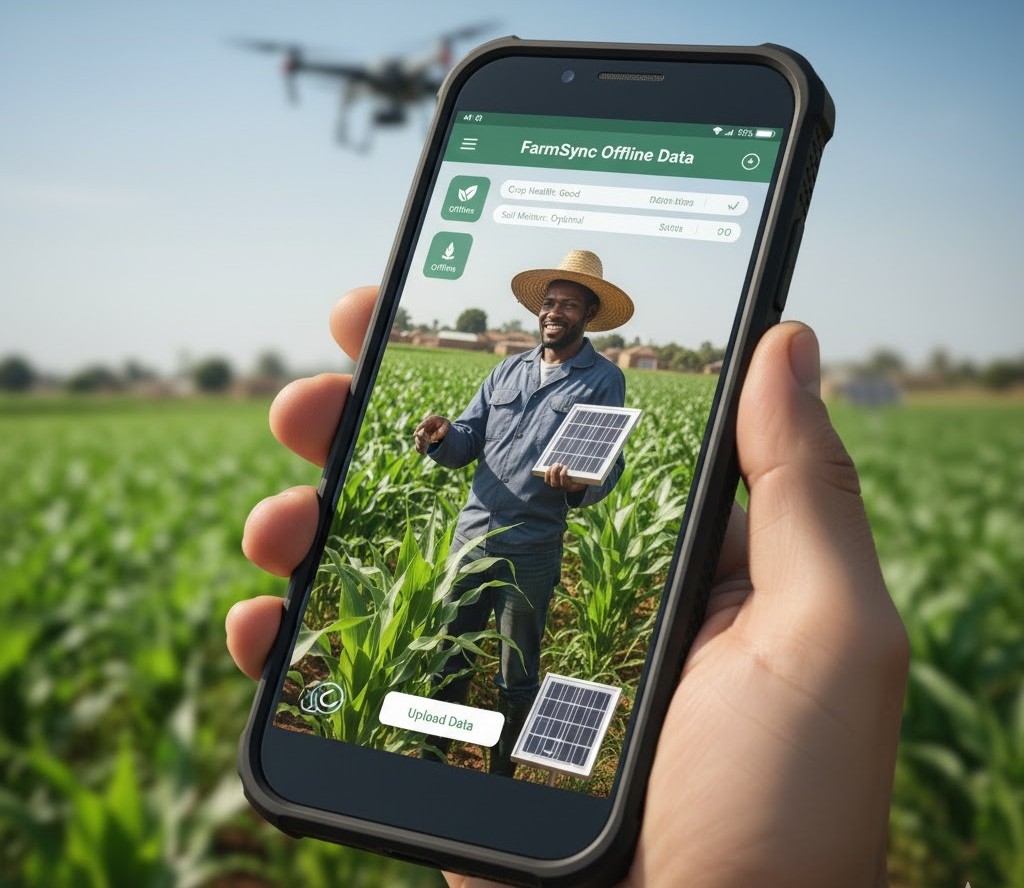
Collecting geolocation and farm-level data at the point of origin often means working in areas with limited or no internet connectivity. We have proven experience building offline-first progressive web applications (PWAs) for field data collection in rural agricultural communities.
Applications capture data reliably without connectivity and sync when a connection becomes available.
Get Started

06Regulatory Reporting and Audit Trails
We build automated due diligence statement generation formatted according to EU specifications. Internal audit trails document every step of the compliance process.
Management dashboards show compliance status across your supply chains, and risk assessment reports include supporting evidence for regulatory inspection.
Learn MoreEUDR Implementation Approach
We recommend a phased approach that prioritizes data collection first, because geolocation and traceability data takes time to accumulate across your supply chains.
Data Collection & ERP Integration
We establish geolocation data collection at the point of origin and integrate traceability into your ERP. Purchase orders, supplier batches, and production plots are linked digitally so chain-of-custody records flow automatically.
Deforestation Verification
We add deforestation verification using Sentinel-2 satellite imagery via Copernicus. Vegetation indices and change detection algorithms identify deforestation events after the regulatory cutoff date.
Risk Assessment Workflow
Plots flagged for potential deforestation are routed to a risk assessment workflow. Human reviewers evaluate evidence, approve or escalate, and document decisions for compliance audits.
Regulatory Reporting
We implement automated due diligence statement generation formatted according to EU specifications. Management dashboards show compliance status across your supply chains.
Audit Trails & Evidence
Internal audit trails document every step of the compliance process. Risk assessment reports include supporting evidence for regulatory inspection.
Adapting to Change
Iterative compliance readiness — so you're prepared before the deadline, not scrambling at it.
Start With the Highest-Risk Gaps
We sequence readiness by impact: geolocation completeness, deforestation validation, legality checks, and DDS readiness, focusing first where regulatory downside is highest.
Start Your EUDR Compliance Roadmap
The earlier you begin collecting geolocation and traceability data, the stronger your compliance position will be. Talk to us about your supply chains, current systems, and compliance timeline.
Domains We Serve
Here are the most common industries for this offering.
AgriTech & Sustainability
Offline-capable field data collection platforms and supply chain compliance tools deployed across East Africa, South America, and South Asia. PWAs with local data sync, SMS fallback, and voice interfaces. EUDR compliance workflows, traceability mapping, and certification body integration.
Telecom & IoT
Connected device platforms with data ingestion pipelines for high-volume telemetry. Device management portals, real-time operational dashboards, and MQTT/CoAP integration for industrial and agricultural sensor networks.
Smart Energy
Energy monitoring dashboards, consumption analytics, and predictive maintenance systems. We integrate with smart meter APIs and building management systems to reduce waste and meet sustainability targets.
Governance & Compliance
Regulatory compliance platforms, governance assessment tools, and audit management systems. Survey platforms tracking sustainability indicators across global supply chains, with multi-language support and role-based access.
Technology Stack
Our EUDR technology implementations typically use Python for geospatial processing and satellite imagery analysis, Sentinel-2 imagery via the Copernicus Data Space Ecosystem, PostGIS for geospatial data storage and spatial queries, Odoo or SAP for ERP integration, React or PWA frontends for field data collection and management dashboards, and REST APIs for connecting compliance modules with existing business systems.
The specific stack is adapted to your existing infrastructure and operational requirements.
Geospatial & Satellite
Python
PostGIS
- Sentinel-2
- Copernicus
- NDVI
QGIS
ERP & Integration
Odoo
SAP
- REST APIs
Microsoft Dynamics
Frontend & Field Apps
React
Next.js
PWA
Node.js
TypeScript
Cloud & DevOps
AWS
Docker
Kubernetes
GitHub Actions
Terraform
Engagement Models
We tailor delivery to your team structure and ownership preference. For full process detail, review the dedicated engagement model page.
Outsourcing
- Outcome-based delivery ownership
- Managed roadmap, QA, and releases
- Best for end-to-end product builds
Staff Augmentation
- Engineers integrated into your team
- You keep sprint and release control
- Best for scaling delivery capacity fast
Tech Consulting
- Architecture and platform strategy guidance
- Roadmap, risk, and cost optimization
- Best for audits, modernization, and decision support
Useful Reads


Frequently Asked Questions
Common questions about EUDR compliance, supply chain traceability, and how we help commodity importers meet EU Deforestation Regulation requirements.